Your wrist tracker is better at some numbers than others.
Researchers have tested wearables against lab-grade equipment. Steps and heart rate mostly hold up. Calories burned do not, and sleep stages are hit and miss. Here is what the evidence says.
Choose a measurement to see what independent studies found when they compared wearables with lab equipment. The bar shows how well the devices performed overall.
Based on laboratory studies of specific models. Devices change often, and results vary by maker, model and person. Not medical advice.
TWO NUMBERS WORTH KNOWING
Pulse holds up, calories do not.
Both from a Stanford study of seven wrist devices worn by 60 volunteers on treadmills and exercise bikes.
6 of 7
Devices measuring heart rate within 5%
Compared with a medical-grade electrocardiograph, six of the seven devices measured heart rate with an error rate of less than 5 percent.
HEART RATE · STANFORD 2017
27–93%
Average error in energy expenditure
Compared with breath analysis, the most accurate device was off by an average of 27 percent and the least accurate by 93 percent.
CALORIES · STANFORD 2017
A Stanford researcher said that for a lay user in a non-medical setting, the aim would be to keep error under 10 percent.
MAKING THE NUMBERS USEFUL
Use the trends, not the decimals.
A tracker can still be a useful nudge. These tips follow what the studies found and the NHS activity guidelines.
Count active minutes
The NHS suggests adults aim for at least 150 minutes of moderate activity a week, or 75 minutes of vigorous activity.
Use the talk test too
Moderate activity raises your heart rate and breathing. The NHS says you can still talk, but not sing.
Do not eat to the calorie count
Energy figures were the least accurate measure in the studies, so treat them as a rough guide, not a budget.
Break up sitting
The NHS also advises reducing time spent sitting or lying down and breaking up long periods of not moving with some activity.
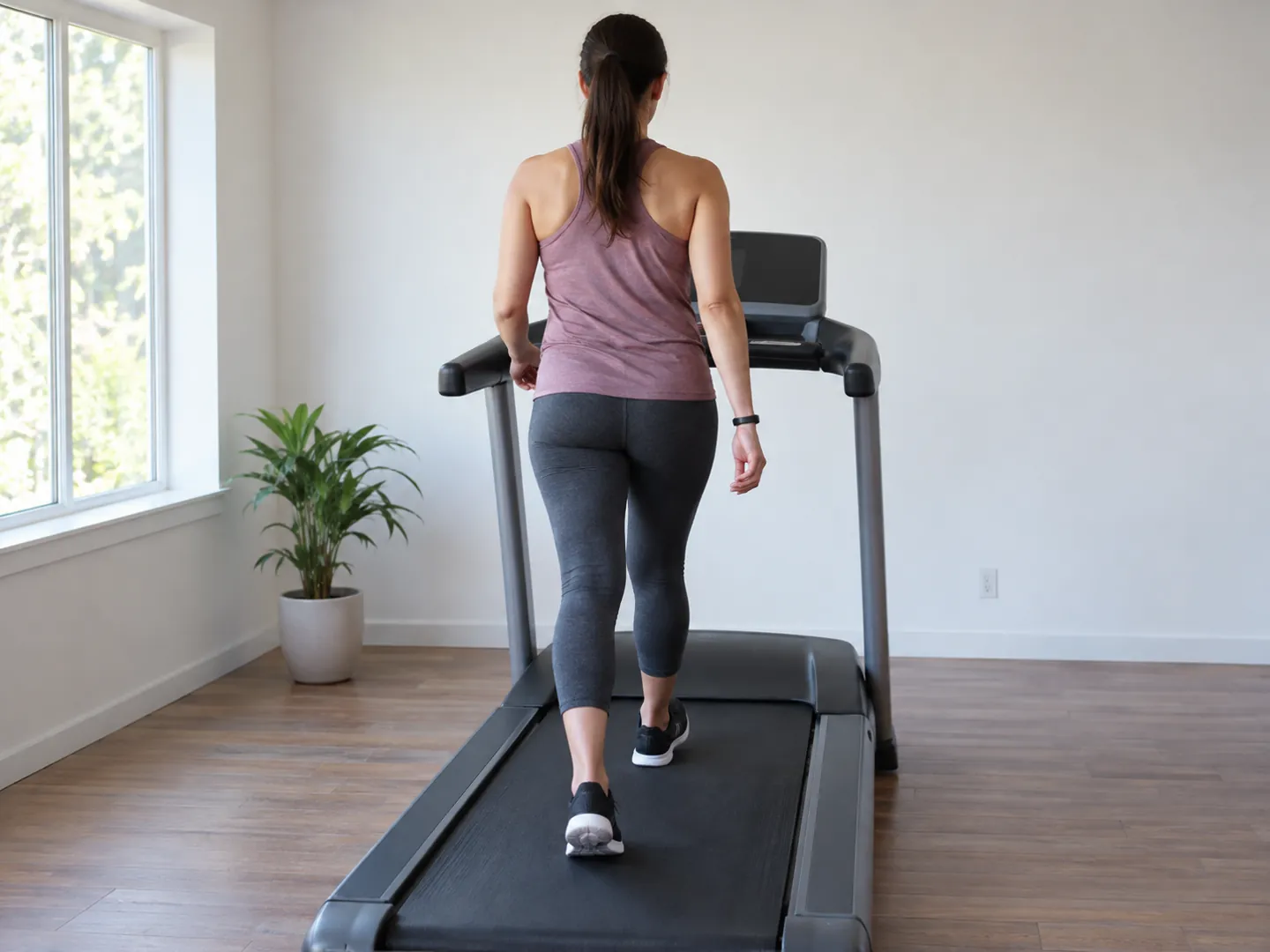
AI-generated image, not a photograph of a real person or place.AI-generated image, not a photograph of a real person or place.
SLEEP TRACKING
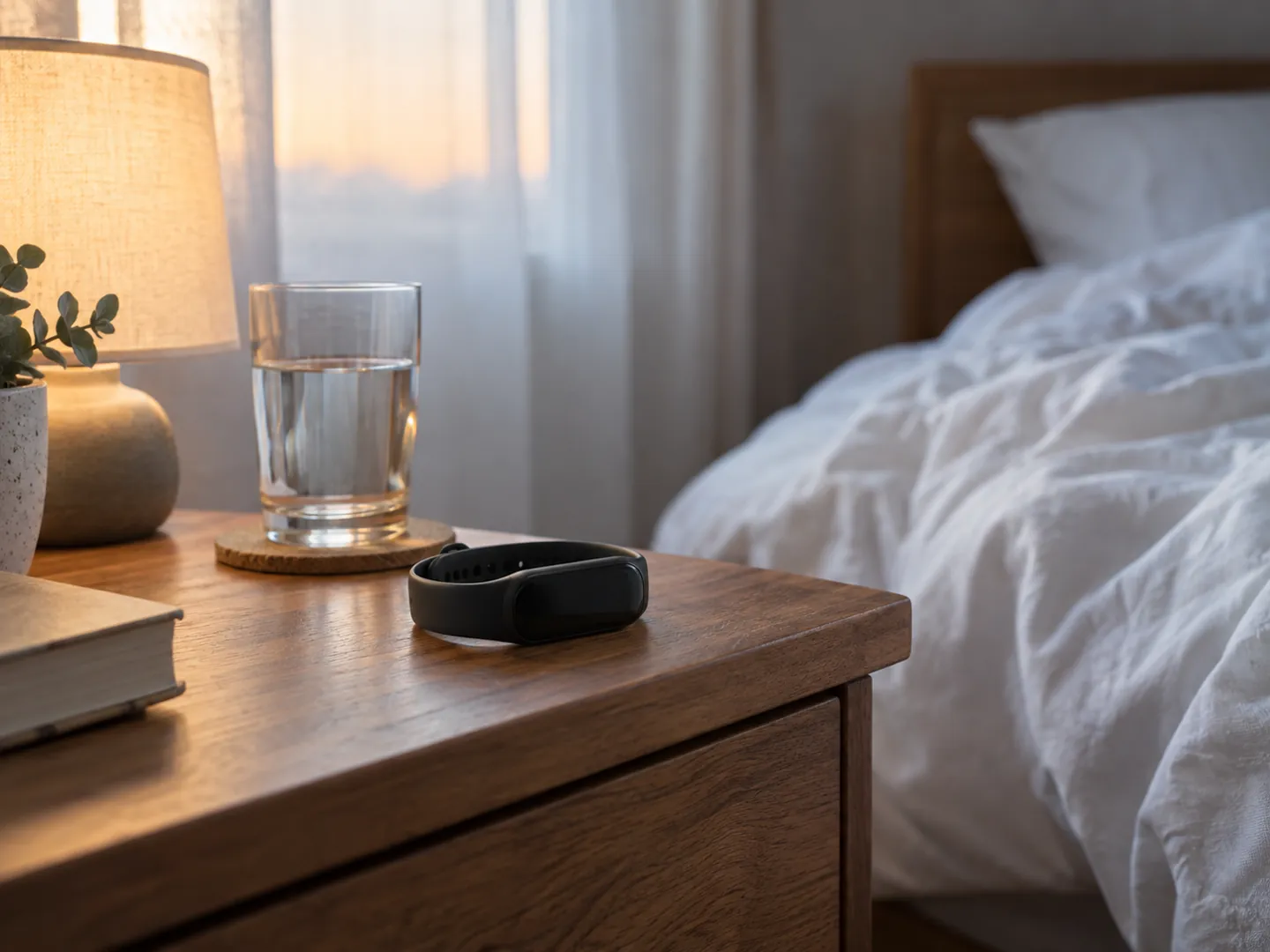
It knows you slept. It is less sure how.
A 2021 study tested seven consumer sleep trackers on 34 healthy young adults over three nights in a sleep laboratory, against polysomnography, the standard lab sleep test. Sensitivity for detecting sleep was high in every device, at 0.93 or above.
Spotting time awake was harder, with specificity of 0.18 to 0.54, and devices did worse on nights of disrupted sleep. The authors called the sleep stage results inconsistent, and said devices should be tested in more groups of people and settings.
Questions
Questions people ask
Are fitness trackers accurate for steps?
Mostly, in lab tests. A 2020 systematic review of 158 studies found several leading brands measured steps accurately in laboratory settings, though accuracy varied by manufacturer and device type.
Can I trust my tracker's heart rate?
Usually for general use. In a Stanford study, six of seven wrist devices measured heart rate within 5% of an electrocardiograph. Skin colour and body mass index affected some measurements.
Why are calorie counts so far off?
Heart rate is measured directly, but energy expenditure is calculated. Stanford researchers said each device uses its own formula, and it is hard to make one that fits people of different fitness, height and weight.
Do sleep trackers work?
They are good at detecting when you are asleep and most matched or beat research-grade actigraphy at detecting wake. Their breakdown of sleep stages was inconsistent in a 2021 laboratory study.
How much activity should I aim for?
The NHS says adults should aim for at least 150 minutes of moderate activity or 75 minutes of vigorous activity a week, plus strengthening activities on at least 2 days.